How It Works
How our pool removal process works.
No surprises is the whole point. Here is the order things happen in, what we need from you at each stage, and where the schedule usually moves.
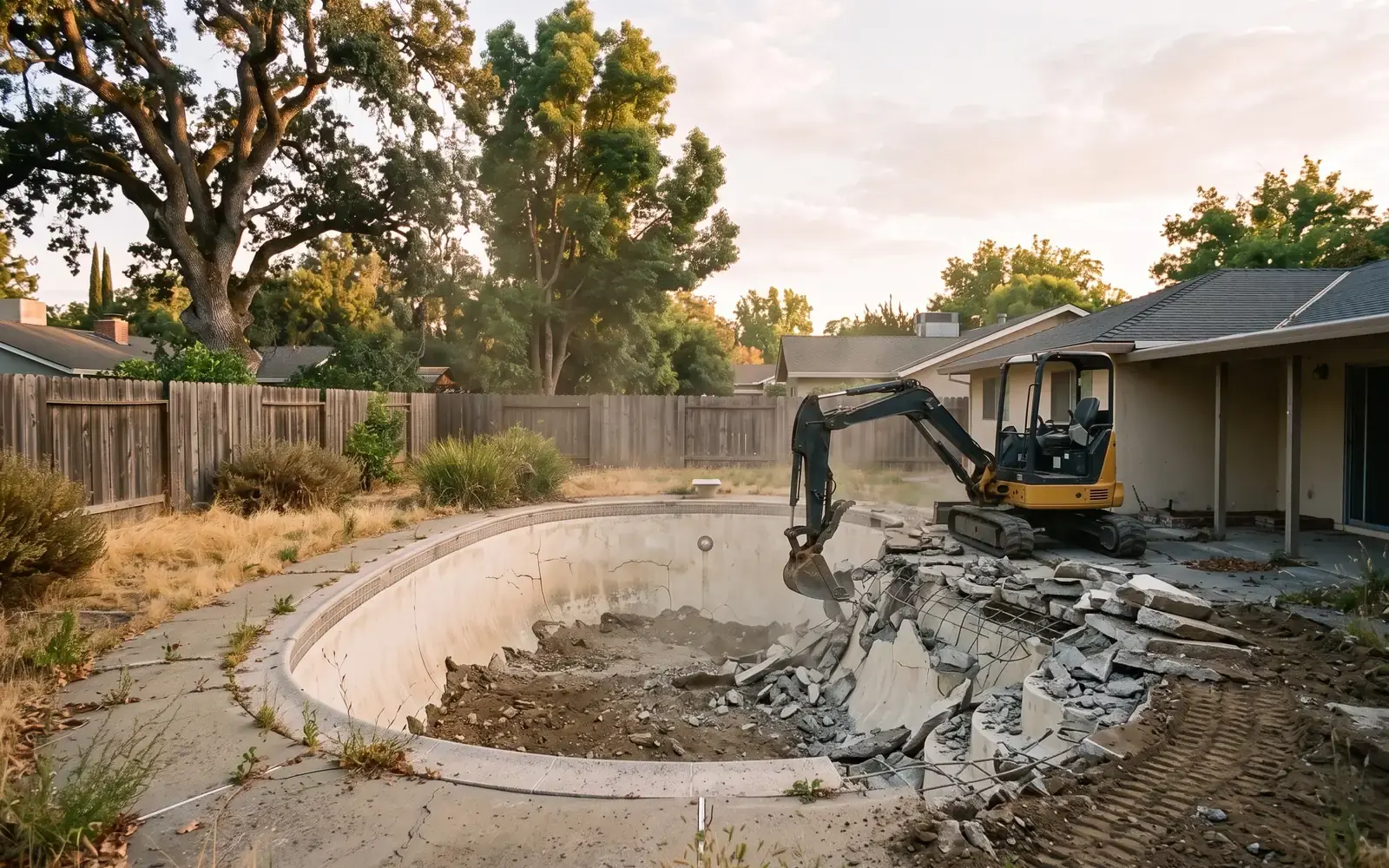
Plate 01—Removal
How does the pool removal process work?
Short answer
Our pool removal process runs from a site walk and written scope to permit coordination, demolition, hauling, backfill, compaction and final grade. The order stays consistent; access, jurisdiction, shell material and the intended future use are what change the work.
The site walk is where assumptions stop. We identify the equipment path, what material must leave, what can remain, which department has jurisdiction and what the finished ground needs to support. The proposal then records those decisions before scheduling or demolition begins.
How the project runs
Five stages. One written plan.
- 1
Plan
Walk the site, confirm the removal goal, access and visible constraints.
- 2
Permit
Prepare and coordinate paperwork with the department serving the property.
- 3
Remove
Demolish the shell to the approved scope and haul debris away.
- 4
Backfill & Compact
Place approved fill in lifts according to the project requirements.
- 5
Grade & Document
Finish the surface to the agreed grade and close out available project records.
On Your End
What to expect on your end.
Before the site walk
Nothing to prepare. If you have a plot plan, an old permit or any idea where utilities run, it helps — but not having them is normal and we work without them.
Access is the big variable
We measure the narrowest point equipment has to pass through. Gates, side yards, overhead lines and neighbouring fences all shape which machine can come in, and that shapes the plan.
Utility locating
Underground service alert marking happens before anything gets dug. This is a required step, not an optional one, and it takes the time it takes.
During demolition
Expect noise, truck traffic and dust control. We keep debris contained and the working area closed off.
Settlement, honestly
Any backfill can settle somewhat as it takes on water over the first seasons. Proper compaction in lifts is how that risk is managed. Anyone promising zero settlement is guessing.
After final grade
You get a graded surface, not a landscaped yard. Turf, planting, hardscape or a build is the next trade, and we will tell you what the ground is ready for.
Three stages, one property
The work, documented.
The visible part is demolition. What matters later is the scope, material leaving, fill going back in and final grade.
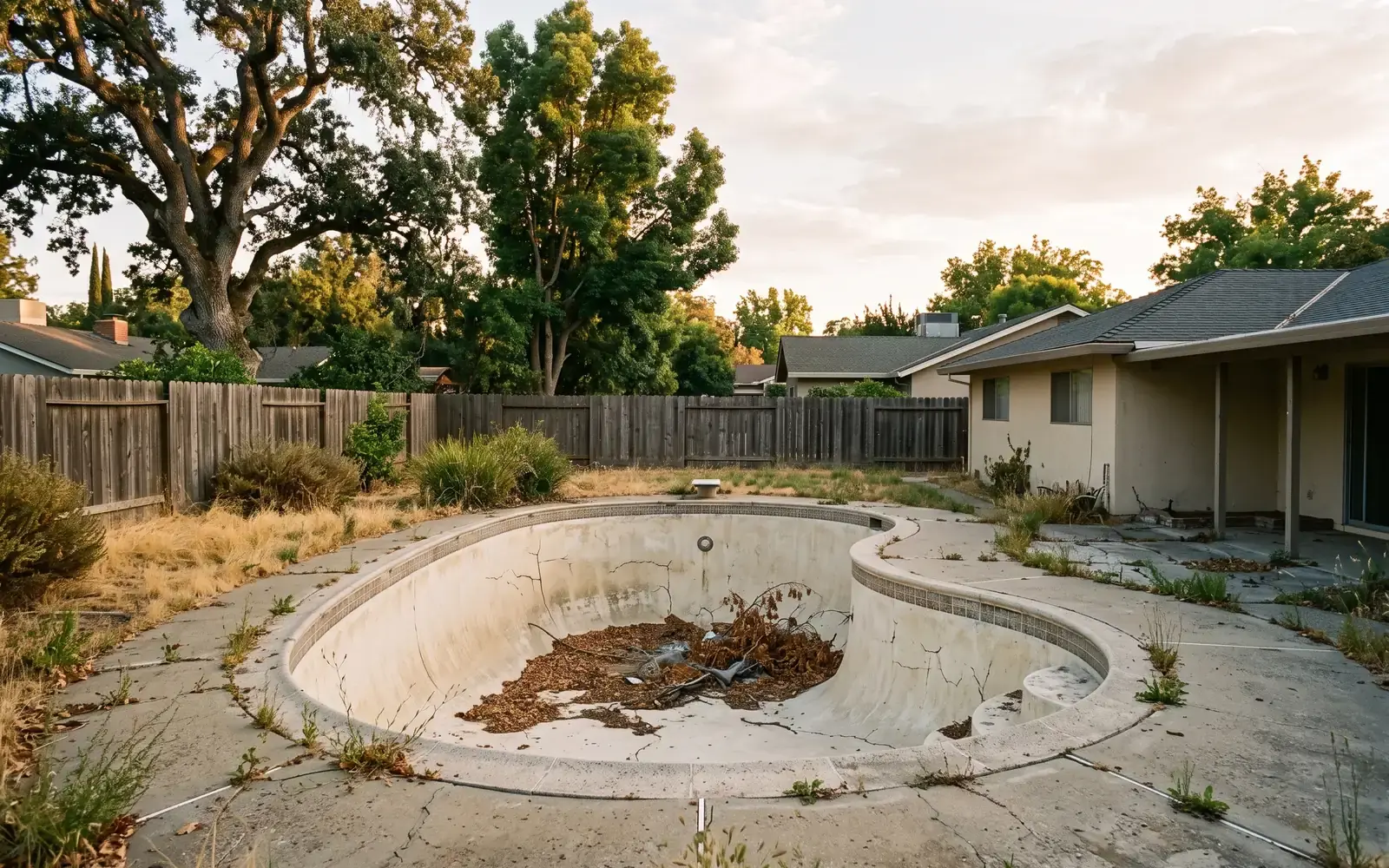
Before
An unused shell taking up the yard.
Removal
Shell broken out to the approved scope and hauled off.
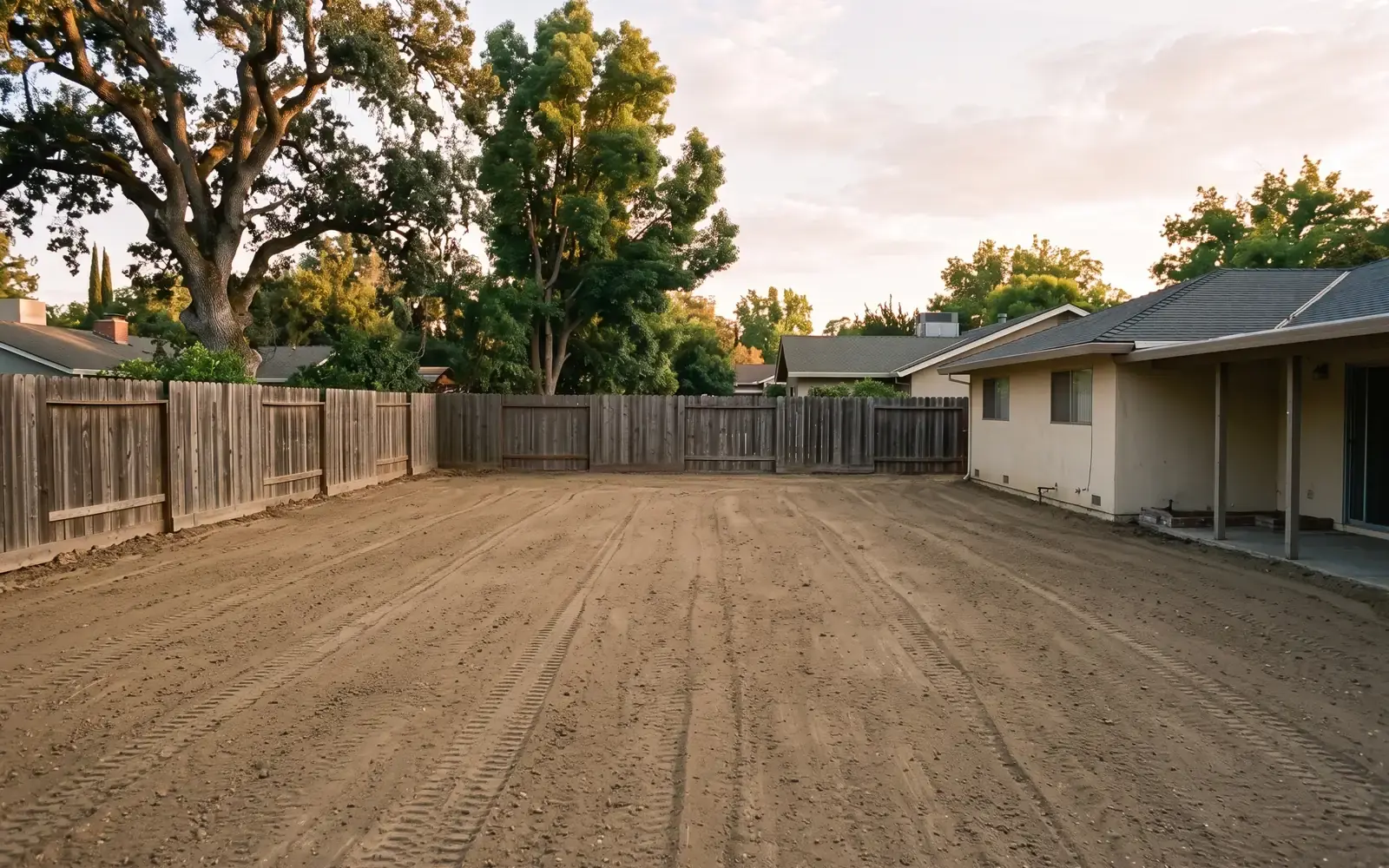
Final Grade
Fill placed, compacted and graded to a clean surface.
Next step
Ready to find out what your property needs?
A site walk is where an accurate scope starts — access, shell type, depth, utilities and what you want the ground to do afterwards.
Process questions.
The first working step is a site walk. Access, shell type, depth, utilities, slope, surrounding decking and the intended future use of the footprint are reviewed before a scope is written. That prevents a generic method from being priced against a property it does not fit.
Start With The Site
Ready to start with the site walk?
Send the property and pool details. We will confirm the basics, identify what needs to be seen in person and schedule the next step.
Send the basics
Four required answers. Add detail only if it helps.
Walk the property
We confirm access and the scope on site.
Get it in writing
Recommended option, sequence and what happens next.
Still researching the work? Read the complete pool removal service overview.
No obligation, no pressure
Request a site estimate.
Start with the property and what you want the ground to do afterwards. We will follow up to arrange the site walk and confirm the scope.
Read Next
What each stage depends on.
Who issues your permit
The stage with the most variance in the whole sequence, and it varies by department.
How long it takes
The same sequence, read as a schedule — and what stretches each part of it.
Backfill and grading
Steps four and five in detail, which is where the long-term outcome is decided.
Partial or full removal
Settled at step two, and it changes everything after it.
What it costs
What the site walk is actually measuring.
Where we work
27 communities, each with its own permit path.