Option 2 Of 2
Full pool removal.
Remove and haul away the entire pool shell, then backfill and compact the excavation before final grading. This is generally preferred when future construction may use the former pool footprint.
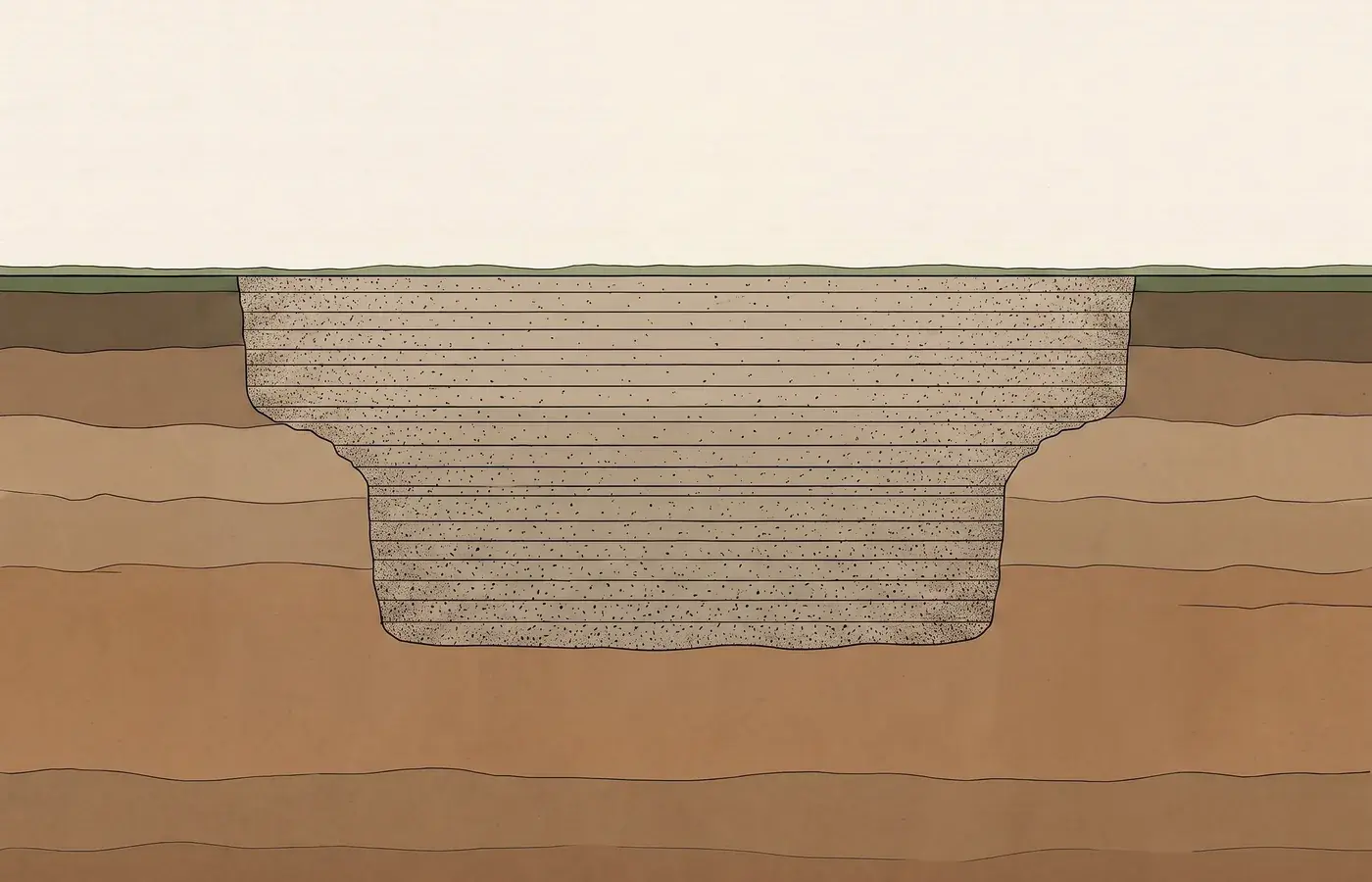
Plate 01—Full removal
The Process
How does full pool removal work?
Future builds usually require full removal.
- 1
The whole shell comes out
Walls, floor and bond beam are broken out in full. Plumbing and any remaining equipment are dealt with at the same time.
- 2
Material leaves the property
Rubble and spoils are loaded and hauled off rather than buried on site. Nothing structural stays in the ground.
- 3
The excavation is backfilled and compacted
Approved fill is placed in lifts and compacted across the full footprint, not just the former pool cavity.
- 4
Finish grade
The surface is graded continuously across the old footprint so it reads as one piece of ground, draining away from structures.
Why It Wins
Why owners choose it.
Generally preferred when
- A structure may go over the former pool footprint later.
- You want the ground treated as ordinary buildable yard.
- You would rather not carry a filled-in pool into a future sale.
Worth knowing
- Scope is larger than a partial fill-in: more material out, more material in, more truck traffic.
- Equipment access matters more here, because more has to move through the yard in both directions.
- Whether a specific future build is permitted on the footprint is a question for your local building department and, where applicable, a soils engineer — not something we can promise.
Requirements vary by jurisdiction and property. Your local building department determines which option is permitted and what documentation it needs. We coordinate the paperwork and tell you what we learn.
Compare partial and full removal side by sideNext step
Ready to find out what your property needs?
A site walk is where an accurate scope starts — access, shell type, depth, utilities and what you want the ground to do afterwards.
Scope Boundaries
What full removal means on the property.
Full removal describes what happens to the pool shell; it does not make every object around the pool part of the job automatically. The site walk turns that method into a property-specific scope by naming access, decking, equipment, utilities, disposal, fill and the finished condition in writing.
Access and protection
The narrowest gate, overhead clearance, slopes and truck staging determine which equipment can reach the shell. Fences, paving and planting near that path need to be identified before mobilisation, not negotiated after a machine arrives.
Decking, plumbing and equipment
The pool shell is the core scope. Deck removal, equipment pads, connected lines and electrical or gas work belong in the proposal only where they are specifically included. Anything outside that written boundary stays outside the promise.
Fill and compaction
Once the shell is gone, the excavation is filled with approved material placed in lifts. Material, lift depth, moisture and compaction method follow the project requirements; pushing one deep mass of loose soil into the hole is not the same work.
Grade and records
The closeout condition is compacted ground shaped to drain away from structures. Keep the permit, inspections, disposal documentation and final scope with the property records, especially if the footprint may be built on or the home may be sold later.
Where You Are
Full removal in your area.
The method is the same everywhere. What changes is which building department reviews it, what that department publishes, and what else applies on your lot — tree ordinances, right-of-way staging, septic setbacks, debris diversion. Each of these pages covers the local layer.
- Sacramento full removal
- Roseville full removal
- Rocklin full removal
- Folsom full removal
- Elk Grove full removal
- Citrus Heights full removal
- Carmichael full removal(Sacramento County)
- Fair Oaks full removal(Sacramento County)
- Rancho Cordova full removal
- Orangevale full removal(Sacramento County)
- Lincoln full removal
- Granite Bay full removal(Placer County)
- El Dorado Hills full removal(El Dorado County)
Full removal questions.
Full removal means breaking out and hauling away the pool shell rather than leaving the lower shell buried. The project scope also addresses accessible decking and equipment included in the written proposal, disconnected pool plumbing, the open excavation, imported fill, lift compaction and final grading. Site conditions and the permitting authority still decide the exact scope for a particular property.
Start With The Site
Planning a full removal?
Tell us what may happen on the footprint afterwards. Future use, access and the existing shell are the three things that shape the written scope.
Send the basics
Four required answers. Add detail only if it helps.
Walk the property
We confirm access and the scope on site.
Get it in writing
Recommended option, sequence and what happens next.
Still researching the work? Read the complete pool removal service overview.
No obligation, no pressure
Request a site estimate.
Start with the property and what you want the ground to do afterwards. We will follow up to arrange the site walk and confirm the scope.
Read Next
Related reading.
Partial pool removal
The lighter-scope alternative, and when it is genuinely the better call.
Removing a pool to build
The reason most people end up here rather than on the fill-in page.
Backfill and compaction
An open excavation is a different fill problem from a capped shell.
What it costs
More material moves in both directions, so access has more leverage here.
Who issues your permit
Every department we work with, and what each one publishes.
Concrete and gunite removal
What full removal means on the heaviest shell material.