Written Down
Straight answers, written down.
The questions that come up before anyone signs anything. We would rather you read these and then hire someone else than sign something you did not understand.
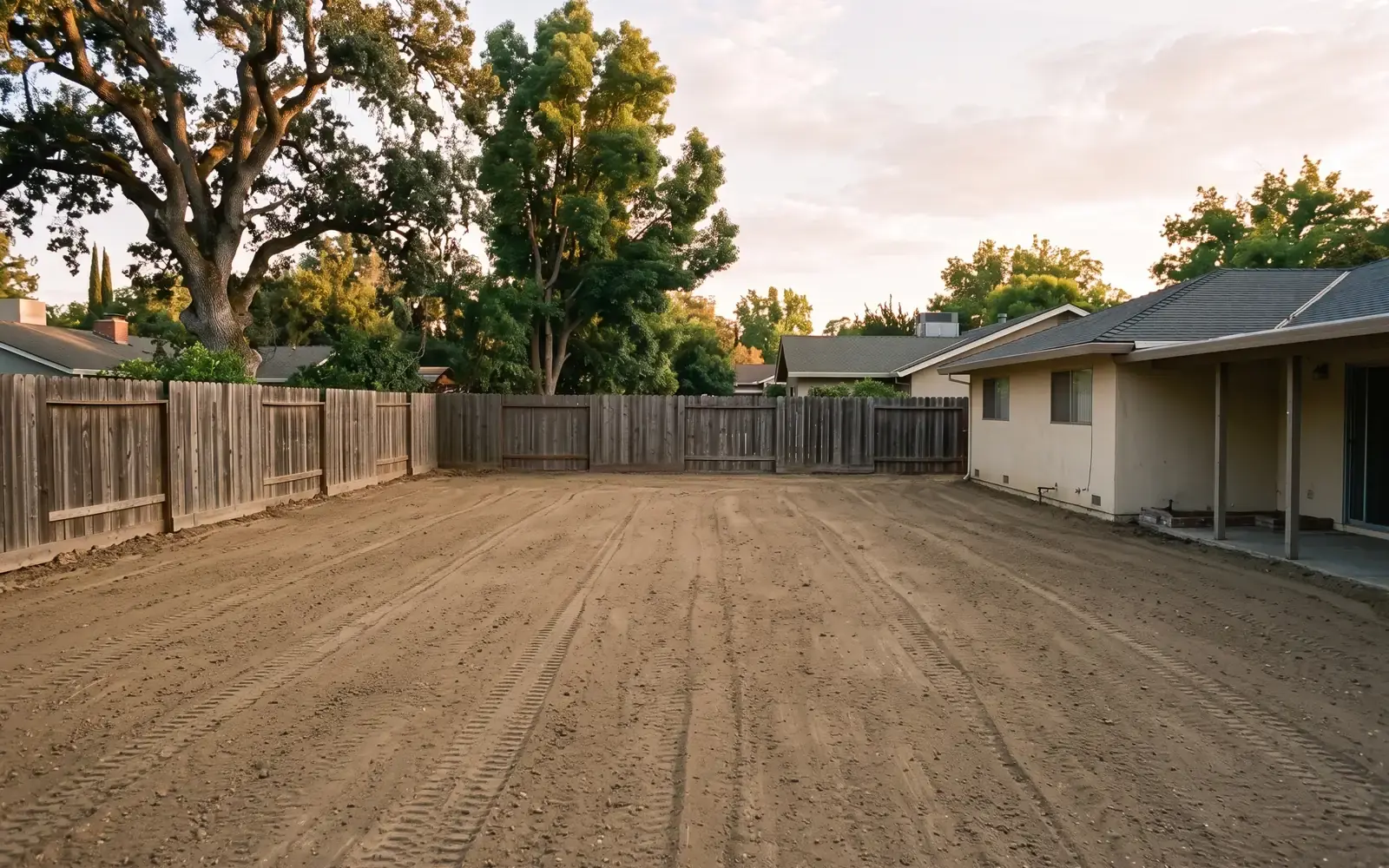
Plate 03—Final Grade
About these resources
What this is
Reference material on pool removal in Sacramento, Placer, El Dorado and Yolo counties: what drives the cost, which building department issues your permit, how backfill and compaction actually work, and what happens to the ground afterwards. Written to be useful whether or not you hire us.
Every jurisdiction claim in here cites the government page it came from and carries the date we last checked it. Where something is genuinely unsettled — and a surprising amount of it is — we say so rather than picking the answer that sells better.
If a contractor will not put it in writing, it is not part of the job.
Decision Guides
Working out what to do.
What pool removal costs
Eleven things that move the number, and how to read two estimates against each other. No invented ranges.
Who issues your permit
All 27 communities we serve, the department that handles each, and the two that publish pool-specific rules.
Partial or full removal
The decision everything else follows from, side by side.
Backfill, compaction and grading
The half of the job you cannot see, and the half that causes problems later.
Removing a pool to build
What an ADU or addition over the old footprint actually requires — and who decides.
Removing a pool before selling
What has to be disclosed, and why the paperwork outlives the work.
Guides
The ones people ask for by name.
How long does pool removal take?
Why the demolition is the short part, and what actually moves the schedule.
Questions to ask a pool removal contractor
The questions that separate a real scope from a number on the back of a card.
What to do after pool removal
Settlement, drainage, planting and building — what the ground can take, and when.
By Pool Type
What your pool is made of changes the job.
Not by a little. A one-piece fiberglass shell and a reinforced gunite shell are different demolitions with different equipment, different disposal streams and different amounts of material leaving the property. An above-ground pool is barely a demolition at all.
Concrete & gunite
The most common in-ground shell in this region, and the heaviest to break out.
Fiberglass
A one-piece shell that comes out differently — and often more cleanly — than concrete.
Vinyl-liner
Liner, then the wall panels and footing underneath them. Two materials, two disposal streams.
Above-ground
A different job entirely: no shell to demolish, but a base and a footprint left behind.
Local
Where you are matters.
All 27 service areas
Grouped by county, because county is what decides the permit path. Twelve of them are unincorporated.
How a removal runs
Site walk, plan, permits, demolition, backfill, grade — in order, with what waits on what.
The general FAQ
The questions that come up on almost every site walk, in one place.
About the Guys
Who you would actually be dealing with, and what we will and will not claim.
Next step
Ready to find out what your property needs?
A site walk is where an accurate scope starts — access, shell type, depth, utilities and what you want the ground to do afterwards.
Read enough?
A site walk is free and it is where every accurate estimate starts. Bring the questions from these pages with you.