Before You List
Removing a pool before you list your house for sale.
You’re weighing whether to remove the pool before your house goes on the market. The honest answer depends on the pool’s condition, what you can document, and a conversation with your agent — not a number we can hand you. Here’s what actually matters to that decision.
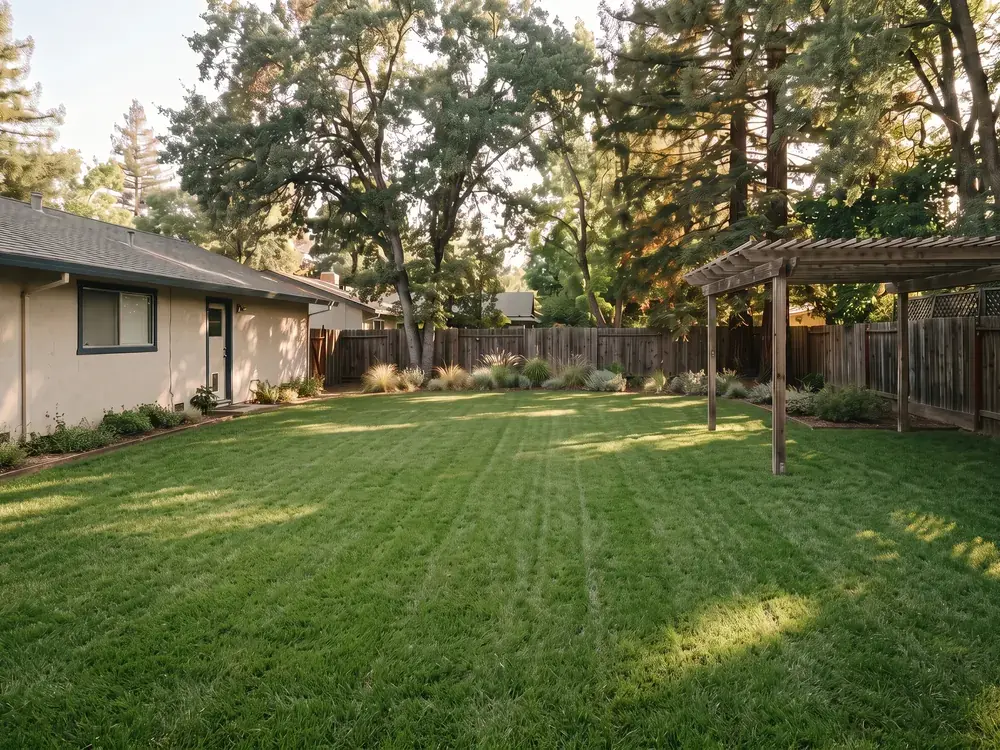
Plate 01—Lawn
Do you have to disclose a removed pool when selling a house in California?
Short answer
California requires sellers of a 1-4 unit home to deliver a Transfer Disclosure Statement covering known material facts, and it can’t be waived even in an "as is" sale (Civil Code section 1102). State law doesn’t specifically list a filled-in or removed pool as a disclosure item — but a filled pool is a condition you know about, which is exactly what the form exists to cover.
We’ve pulled pools right before closing and watched it stretch the timeline. Decide early, not during escrow.
What buyers actually react to: a neglected pool vs. a removed one
There’s no single answer here, and be wary of anyone who gives you one. Some buyers want a pool and will discount a listing that doesn’t have one. Others see a pool as a liability — maintenance, insurance, a safety concern with kids — and a filled-in yard reads as a plus. Which buyer shows up for your specific house, in your specific price range and neighborhood, is a market read, not something we can tell you.
What we can say from doing the removal work itself: a neglected, green, unmaintained pool is rarely a neutral feature. It tends to read as deferred maintenance across the whole property, not just the pool. Whether the fix is removal, or simply restoring the pool, is a conversation for your listing agent, who knows your specific buyer pool and comparable sales in a way we don’t.
What California disclosure law actually says about a filled-in pool
Civil Code section 1102 requires sellers of most 1-4 unit residential property to deliver a Real Estate Transfer Disclosure Statement, and it can’t be waived even when the sale is marketed "as is." The TDS covers known material facts about the condition of the property. It doesn’t contain a line item specifically for "filled-in pool" or "removed pool" — the statute doesn’t enumerate it by name.
What matters is the general rule underneath that specific gap: you disclose what you actually know. A filled-in pool is a physical condition of the property that you, as the seller, know about — that puts it squarely in the category of things the TDS process exists to surface, not because a statute names it, but because you have direct knowledge of it. This is a legal question, and we are not attorneys; for a definitive read on your disclosure obligations, talk to your real estate agent or a real estate attorney.
Why partial vs. full removal matters more once you’re selling
Buried concrete doesn’t go away because it’s underground. A partial fill-in leaves the lower pool shell in place, and that’s a condition of the property that follows it into escrow — it can surface in a home inspection, a pest inspection probing for structural issues, or simply in a seller’s own knowledge that has to be disclosed either way.
Full removal, with the entire shell taken out and the excavation backfilled and compacted, leaves a cleaner story to tell: there’s no old concrete under the yard for an inspector to find or a buyer to ask about later. That’s not a value claim — we won’t tell you it adds a specific number to your sale price — it’s simply a different set of facts to disclose and a different inspection outcome to manage.
Worth Knowing
The real asset is documentation, not the hole
The single biggest difference between a smooth pool-removal disclosure and a messy one isn’t whether you did partial or full — it’s whether you can hand a buyer paperwork. A permit record, a final inspection sign-off, and documentation of how backfill was placed and compacted turn "trust me" into something a buyer’s agent, inspector, and lender can actually verify.
A seller who can produce that paperwork is in a fundamentally different position than one who can’t, even if the underlying work was identical. Keep the permit, the final inspection record, and whatever compaction or fill documentation your contractor provides. If you’re having a pool removed with a future sale in mind, ask for that paperwork up front and keep it somewhere you can find it years later.
Next step
Ready to find out what your property needs?
A site walk is where an accurate scope starts — access, shell type, depth, utilities and what you want the ground to do afterwards.
At A Glance
What paperwork you can hand a buyer, and what a documented removal gets you
| Document | After a permitted, documented removal | After an unpermitted or undocumented fill |
|---|---|---|
| Demolition permit record | Available from the issuing jurisdiction | Does not exist |
| Final inspection sign-off | Available, ties the work to an approved permit | Does not exist |
| Backfill / compaction documentation | Provided by the contractor who did the work | Unknown — may require a soils engineer to evaluate |
| A clear answer to "was this permitted?" | Yes, and you can prove it | No, or unknown |
| What you’re disclosing | A documented, completed condition | A known but unverified condition |
Source: California Legislative Information, Civil Code § 1102 et seq. — Real Estate Transfer Disclosure Statement (opens in a new tab)Verified August 22, 2026. Permit requirements change — confirm with the department before relying on this for your property.
Timing removal against your listing
Removal, backfill, and grading take real time on-site, and that timeline doesn’t compress well once you’re already in escrow with a buyer waiting. Doing the work well before you list — with enough runway for the yard to settle and for you to gather the final paperwork — is generally the less expensive and less stressful order.
Removing a pool mid-escrow, in response to a buyer request or an inspection finding, tends to be the version that costs the most in both money and leverage: you’re negotiating from a position where the buyer knows you need the work done to close. If removal is even a possibility, that’s a decision worth making with your agent before the house goes on the market, not after an offer is on the table.
What an undisclosed or unpermitted prior fill does to a transaction
If a previous owner filled in a pool without a permit, and you didn’t know about it when you bought the house, you’re now the seller of a property with an undocumented condition — and once you do know about it, that knowledge is what the disclosure obligation attaches to. This is a genuinely common situation, not a rare one, and it’s worth taking seriously rather than hoping it doesn’t come up.
An unpermitted fill discovered during a buyer’s inspection tends to slow a transaction down and shift the negotiation, because it raises questions neither side can answer without more information. If you suspect your property has undocumented pool fill, raise it with your agent early, and consider having it evaluated, rather than finding out about it the same week you’re supposed to close.
The case for not removing it
Sometimes the pool is the feature, not the problem. A well-maintained pool in good working condition, in a market and price range where buyers expect one, can be a genuine selling point — and removing it would mean spending money to take away something a buyer wanted. We do pool removal for a living, and we’ll still tell you that plainly.
This is exactly the call your listing agent is positioned to make and we aren’t: they know what’s selling in your specific neighborhood right now, what comparable listings with and without pools are doing, and what your specific buyer pool is asking for. Get their read before you assume removal is the right move.
Talk to your agent, and an attorney, before you decide
Nothing on this page is real estate or legal advice, and we’re not licensed to give either. We remove pools. Whether removal makes sense for your specific sale, and what exactly you’re obligated to disclose, are questions for your real estate agent and, where the answer isn’t clear, a real estate attorney.
What we can do is give you an honest, documented removal — with the permit and inspection paperwork intact — so that whatever your agent and attorney decide you need to disclose, you have something real to put in front of a buyer instead of a guess.
Next step
Ready to put a number on your property?
Every answer above changes with access, shell type, depth and what you want the ground to do afterwards. The site walk is what settles them.
Questions On File
Common questions.
Not by name. Civil Code section 1102 requires sellers of 1-4 unit residential property to deliver a Transfer Disclosure Statement covering known material facts, and that can’t be waived even in an "as is" sale — but the statute doesn’t specifically list a filled-in or removed pool as a required item. What it does require is disclosure of what you actually know, and a filled-in pool is exactly that kind of known condition. Confirm your specific obligations with your agent or a real estate attorney.
Start With The Site
Working against a listing date?
Say so at the site walk. Sequencing a removal around a listing is a different planning problem from doing it whenever, and it is much cheaper to solve before escrow than during it.
Send the basics
Four required answers. Add detail only if it helps.
Walk the property
We confirm access and the scope on site.
Get it in writing
Recommended option, sequence and what happens next.
Still researching the work? Read the complete pool removal service overview.
No obligation, no pressure
Request a site estimate.
Start with the property and what you want the ground to do afterwards. We will follow up to arrange the site walk and confirm the scope.
Read Next
Related reading.
Partial or full removal
Buried concrete is a condition that follows the property. That matters more at sale.
Permits by jurisdiction
A permitted, inspected removal is a document you can hand a buyer.
Backfill and compaction
What good documentation of the fill actually consists of.
What to do after removal
Including what to keep in your records, and why it shows up years later.
Removing a pool to build
The other common reason to remove, with a different set of requirements.
What pool removal costs
The drivers to weigh against whatever your agent thinks the pool is doing to the listing.