Resource
What to expect from the ground after pool removal, and how to treat it.
The crew leaves and the yard looks finished, but the ground underneath is still settling in. What you do — and don’t do — afterward affects whether that ground stays stable or gives you a problem to fix later.
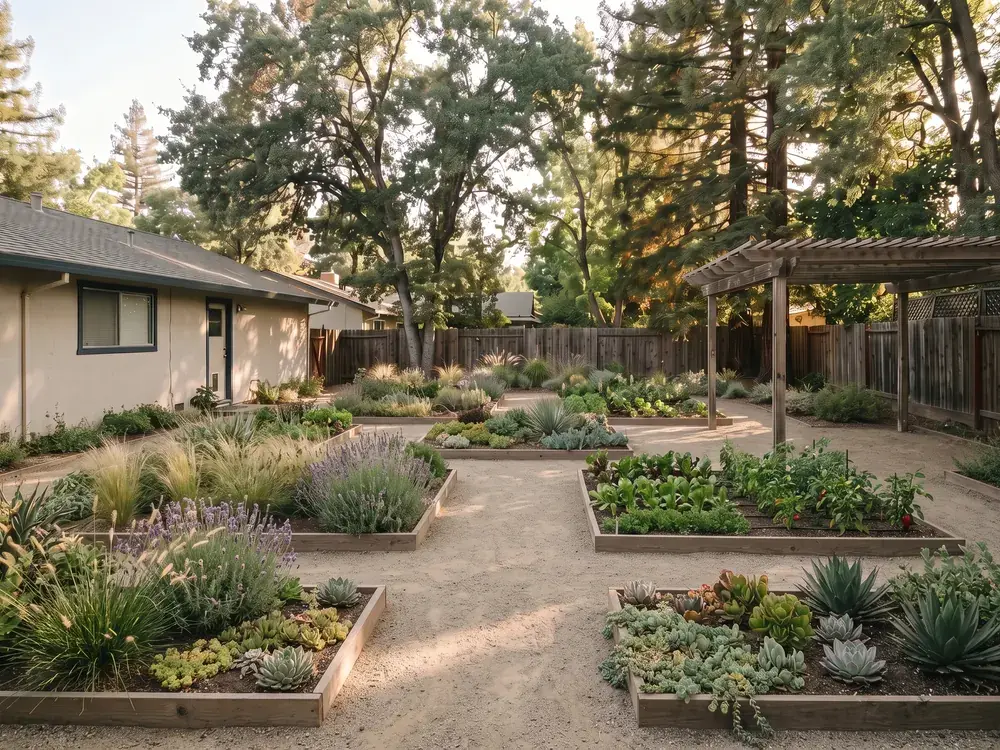
Plate 01—Garden
Is ground settling normal after a pool is removed?
Short answer
Normal ground over compacted fill settles slightly as it adjusts to weather and load; a problem is settlement that’s sudden, uneven, or paired with standing water in the old footprint. Watch drainage through the first rainy season, hold off on heavy structures over a partial fill-in until the ground proves stable, and keep your permit and inspection paperwork — it matters at resale.
Water pooling in the old footprint after a storm tells you more than any amount of eyeballing the lawn ever will.
What normal settlement looks like versus a problem
Some settlement over compacted fill is a real possibility, not a defect — fill adjusts as it takes on moisture through its first rainy seasons and as anything built or planted on top of it adds load. A slight, even, gradual dip across the old footprint, especially early on, is within the range of normal.
What’s not normal: a sudden dip, a depression confined to one small area instead of spread evenly, a crack that opens in a patio or walkway over the footprint, or a low spot where water noticeably collects. Those are signs worth a second look, not something to explain away.
The first wet season is the real test
Fill compacted correctly holds up under saturation; fill that wasn’t shows it during the first heavy, sustained rain the yard sees. This is the single best diagnostic available to you, and it’s free — you just have to be paying attention when it happens.
Walk the footprint during and right after a significant storm. Note where water sits, how long it takes to drain, and whether the surface has shifted anywhere since the last time you looked. A dry summer tells you very little; a wet winter tells you almost everything.
Drainage: the signal that matters most
Water pooling in the old pool footprint, rather than draining across it and away from the house, is the clearest sign something needs attention. Fill and grading are supposed to shed water the same way the rest of your yard does — if the former footprint holds water longer than the surrounding ground, the grade or the compaction underneath it is telling you something.
This matters more than cosmetic settlement, because standing water sitting near a foundation or spreading into surrounding soil can cause problems well beyond the old pool area.
Grading maintenance
Grade isn’t a one-time event you can forget about. Irrigation, foot traffic, planting and ordinary weather all reshape a yard’s surface gradually. Check the slope across the old footprint periodically, particularly early on, and address any low spots with topsoil and reseeding before they become a place water collects.
This is routine yard maintenance, not a sign anything went wrong — the same way you’d touch up any part of a yard that sees new grass or new fill.
Worth Knowing
Planting: lawn, beds and trees
Lawn and shallow-rooted beds are generally the least demanding thing to put over reclaimed pool ground, since they don’t ask much of what’s underneath them. Trees are a different conversation, especially over a partial fill-in, where a remaining lower shell means roots are growing into a different soil and drainage situation than they would in open, undisturbed ground.
If you’re planning to plant a tree near or over the former footprint, especially on a partial removal, that’s a detail worth discussing with whoever removed the pool and, ideally, with a landscaper who can speak to root behavior in fill versus native soil.
Next step
Ready to find out what your property needs?
A site walk is where an accurate scope starts — access, shell type, depth, utilities and what you want the ground to do afterwards.
At A Glance
Symptom, and what it probably means
| Symptom | What it probably means |
|---|---|
| Slight, even dip across the footprint early on | Normal settlement as fill adjusts to moisture and load |
| Water pooling in the footprint after rain | Grade or compaction may need a second look |
| Sudden or localized depression | Worth investigating before building or planting further |
| Crack in patio or walkway crossing the footprint | Rigid hardscape reacting to ground movement underneath |
| Water sitting near the foundation after storms | Drainage direction needs attention, not just the pool area |
| Grass or beds thriving with no visible low spots | Good sign the ground has settled evenly |
| Sprinkler head oversaturating one section | Irrigation may be adding to settlement risk |
Hardscape: patios, pavers and why partial fill-in is treated differently
A patio, paver surface or walkway over the old footprint asks more of the ground underneath than lawn or planting does — it’s a rigid surface sitting on ground that’s still settling, and any unevenness in that settling shows up as a crack or a lip rather than just a dip in the grass.
This is exactly why full removal, with the entire shell out and the excavation backfilled as a single mass, is generally treated differently from a partial fill-in, where a remaining lower shell changes what’s underneath a portion of the footprint. What kind of hardscape is realistic where depends on which removal method was used and how the ground has performed since.
Irrigation
Existing sprinkler lines that ran across or near the old pool area were very likely cut or capped during removal, and they need to be accounted for before you plant anything that depends on them. Confirm with whoever did the removal what was capped, what was rerouted, and what you’re responsible for reconnecting.
New irrigation over reclaimed ground should also be planned with drainage in mind — a sprinkler head that consistently oversaturates one section of settling fill is asking for the exact settlement you’re trying to avoid.
What to keep in your records
Hold onto the permit, the final inspection sign-off, and any documentation of fill material or compaction. These aren’t paperwork for paperwork’s sake — a buyer’s inspector, lender, or agent will ask whether a pool was removed with a permit and finaled, and 'yes, here’s the paperwork’ is a very different conversation than 'I believe so.'
Keep it with your other property records, not in a folder that gets cleared out. This is the kind of document that matters years after the work is finished, often at the exact moment you have the least patience to go looking for it.
What to do if something does settle
If you see a depression, a drainage change, or a crack in hardscape over the old footprint, don’t fill it yourself with whatever’s on hand and hope it holds — document it with photos and dates, and get whoever did the removal, or a qualified contractor, out to look at it before you build or plant anything else on top of it.
Minor, gradual settlement is often addressed with additional fill and regrading of just the affected area. More significant or sudden settlement is worth a closer look at what’s underneath before you patch the surface — patching over a real problem just moves it further into the future.
Next step
Ready to put a number on your property?
Every answer above changes with access, shell type, depth and what you want the ground to do afterwards. The site walk is what settles them.
Questions On File
Common questions.
Some settlement over compacted fill is a real possibility rather than automatically a problem — fill adjusts as it takes on moisture and load over its first seasons in the ground. What separates normal from concerning is the pattern: slight and even is generally expected, while sudden, localized, or paired with standing water is worth a closer look. Nobody can promise zero settlement, and you should be skeptical of anyone who does.
Start With The Site
Something settling that shouldn't be?
If the ground over a removal is doing something you did not expect, tell us. Diagnosing it early is a very different job from diagnosing it after a wet winter has finished with it.
Send the basics
Four required answers. Add detail only if it helps.
Walk the property
We confirm access and the scope on site.
Get it in writing
Recommended option, sequence and what happens next.
Still researching the work? Read the complete pool removal service overview.
No obligation, no pressure
Request a site estimate.
Start with the property and what you want the ground to do afterwards. We will follow up to arrange the site walk and confirm the scope.
Read Next
Related reading.
Backfill and compaction
Why the ground behaves the way it does, from the work that produced it.
Removing a pool before selling
Where the records you kept turn into something a buyer can be handed.
Building over a removed pool
If the plan is a structure rather than planting, the rules change.
Partial or full removal
Which one you chose changes what the ground can carry afterwards.
How long it takes
The project timeline, for the part that happens before this one.
Get a site walk
Including on ground somebody else filled in years ago.